

Every child goes through intense emotions. Growing up is often accompanied by feelings of excitement, frustration, disappointment, fear, rage, and melancholy. However, some kids struggle to comprehend, communicate, or control such feelings.
Additional support may be helpful when emotional outbursts, anxiety, tantrums, or trouble settling down start to interfere with daily activities, school, family routines, or friendships. Families can access self-regulation therapy children Billings to help kids learn useful skills for identifying emotions, controlling stress, and overcoming obstacles.
Pediatric specialists can offer tailored approaches that address children at their developmental stage, from coping skills therapy for kids to emotional regulation OT Montana services.
Self-Regulation: What Is It?
The capacity to identify and control emotions, attention, behavior, and bodily reactions is known as self-regulation. Self-control is not innate in children. Relationships, practice, experience, and the right kind of support all help these skills progressively develop.
Some kids need extra time or help to develop these skills. Programs for self-regulation therapy for kids in Billings can teach kids what their body and emotions are telling them and how to deal with overwhelming emotions.
The goal of therapy could be to assist a child:
- Recognize various feelings
- Identify the outward manifestations of stress
- Express needs in a suitable manner
- After being agitated, calm their body.
- Making the switch between tasks
- Deal with disappointment and frustration
- Improve your ability to solve problems
These abilities can have a significant impact on social relationships, at home, and at school.
Why Do Some Children Have Trouble Controlling Their Emotions?
A child may struggle to control their emotions for a variety of reasons. Emotional regulation can be impacted by a variety of variables, including developmental variations, sensory processing issues, anxiety, communication difficulties, and environmental stresses.
Youngsters who have trouble with kids emotional dysregulation support may react strongly to things that seem insignificant to adults.
A youngster may get very distressed, for instance, when:
- A desired activity concludes
- Unexpected changes to plans
- They commit an error
- A sibling makes contact with their possessions
- A loud noise is heard.
- They are unable to express their desires.
- An activity in the classroom becomes too much.
These responses aren’t always deliberate misconduct. It’s possible that a child just lacks the abilities necessary to control the severity of the situation.
The Benefits of Emotional Regulation OT
Physical and fine motor skills are not the main aspects of occupational therapy. Therapists can also address how a child’s capacity to engage in daily activities is impacted by emotional and sensory regulation.
Services for Emotional regulation OT Montana may include play, organized routines, movement, sensory tactics, and customized coping mechanisms.
A child may receive assistance from a pediatric occupational therapist in understanding:
- How they are feeling
- What causes those emotions?
- The way their body reacts
- What tactics can assist them in taking back control?
When emotional difficulties are linked to sensory processing, attention, transitions, or engagement in everyday activities, this method makes emotional regulation OT Montana particularly helpful.
When Tantrums Grow More Serious
Tantrums are a common occurrence in children, especially in the toddler years. On the other hand, recurrent, protracted, or exceptionally intense episodes might suggest that a youngster requires more assistance.
In addition to teaching kids better coping and communication skills, child tantrum behavioral therapy can assist families in identifying potential causes of recurrent emotional outbursts.
Instead of concentrating just on putting an end to the tantrum, child tantrum behavioral therapy may investigate:
- What preceded the behavior
- What the young person was attempting to say
*If sensory overload was a factor - If the youngster didn’t have a coping mechanism
- How adults can react reliably
- What abilities can be imparted for upcoming circumstances?
When appropriate, a more comprehensive treatment approach involving parents, teachers, occupational therapists, or other experts may include child tantrum behavioral therapy.
Building Support for Children with Emotional Dysregulation
Children require assistance prior to, during, and following emotionally taxing circumstances.
Establishing consistent routines, teaching emotional vocabulary, practicing calming techniques when the child is already at ease, and assisting parents in identifying early warning indicators are some examples of effective kids emotional dysregulation support.
A kid might learn to identify, for instance:
“My body feels constricted. My heart is racing. I must take a break.
This knowledge allows the child to employ a coping mechanism before feelings go out of control.
Eliminating intense emotions is not the aim of kids emotional dysregulation support. The goal is to enable kids to feel those feelings without getting overtaken by them.
Pediatric Mental Health Support: What Is It?
A child’s general mental and emotional health coexists with emotional regulation. When issues like ongoing anxiety, mood swings, behavioral difficulties, or emotional discomfort interfere with day-to-day functioning, families can receive additional support from pediatric mental health Billings MT options.
A child’s support system may include occupational therapy. Children may also benefit from working with physicians, psychologists, counselors, teachers, speech-language pathologists, or other professionals, depending on the circumstances.
It’s crucial for families seeking pediatric mental health Billings MT services to select experts who are aware of the child’s unique demands and developmental stage.
When several providers are engaged, Pediatric mental health Billings MT care should be coordinated and customized.
Teaching Children Useful Coping Skills
When they’re distressed, kids need coping mechanisms that are easy to remember.
Children who get coping skills therapy might learn useful skills like:
- Inhaling deeply
- Requesting a rest
- Activities involving movement
- Exercises involving counting or grounding
- Positive self-talk
- Making use of a calm area
- Recognizing feelings
- Seeking assistance from an adult
The most effective tactics vary depending on the youngster. What is effective for one child might not be effective for another.
Therapists can assist youngsters in frequently practicing these skills through coping skills treatment for kids to make them more accessible in stressful situations.
Comprehending the Regulation Zones
To assist kids in recognizing and discussing their emotional states, some therapists employ the Zones of Regulation paradigm. Instead of categorizing emotions as “good” or “bad,” the framework provides kids with a vocabulary to comprehend their feelings and select coping mechanisms.
Families seeking for a zone of regulation Billings therapist could be trying to find someone who can explain these ideas in a way that is suitable for their child’s age.
To assist children in identifying emotional states, a zone of regulation Billings therapist may include colors, visual aids, stories, games, and real-world scenarios.
It’s crucial to keep in mind that the objective is not for kids to remain in a specific “zone.” Rather, kids discover that all feelings are real and that they may learn how to control their reactions.
Additionally, a zone of regulation Billings therapist can assist educators and parents in speaking consistently in all contexts.
Aiding Kids Who Are Anxious
Sometimes avoidance, impatience, sobbing, bodily problems, trouble parting from caregivers, or strong reactions to unexpected situations are signs of anxiety.
A licensed mental health practitioner can evaluate anxiety symptoms and suggest suitable support for families seeking childhood anxiety counseling Billings.
When anxiety is linked to routines, self-care, school involvement, sensory processing, or other everyday tasks, occupational therapy may be used in addition to counseling.
Occupational therapy and other types of care may be used in conjunction with childhood anxiety counseling Billings treatments, depending on the child’s requirements.
A thorough support plan may include childhood anxiety counseling Billings if a child’s anxiety is seriously interfering with their everyday functioning.
Behavior Support’s Function in Pediatric OT
Occupational therapists examine how kids interact with their daily surroundings. Because of this, behavior support pediatric OT is especially helpful when behaviors make it difficult to engage in everyday activities.
Rather from just asking, “How do we stop this behavior?” therapists might inquire:
“What is this behavior communicating, and what skill does the child need?”
A pediatric occupational therapy method that supports behavior might take into account:
- Needs for the senses
- The capacity for communication
- Environmental stressors
- The difficulty of the task
- Control of emotions
- Transitions and routines
- Coping mechanisms that are accessible
This viewpoint can assist families in using useful, skill-building techniques to deal with difficult circumstances.# Occupational Therapy and Mental Wellness
Everything from dressing in the morning to attending school and playing with friends can be impacted by a child’s mental health.
For youngsters whose emotional regulation issues interfere with their regular activities, occupational therapy emotional health support might be beneficial.
“Occupations” in pediatric occupational therapy include things like:
- Engaging in play
- Education
- Consuming
- Dressing
- Dozing off
- Taking part in family customs
- Engaging with classmates
Occupational therapy emotional health interventions can help children become more self-assured and self-sufficient by addressing the relationship between regulation and engagement.
Occupational therapy emotional health support is a crucial component of a larger developmental care plan for certain families.
How Does Self-Regulation Therapy Appear?
Since each child has unique needs, there isn’t a single conventional therapy session.
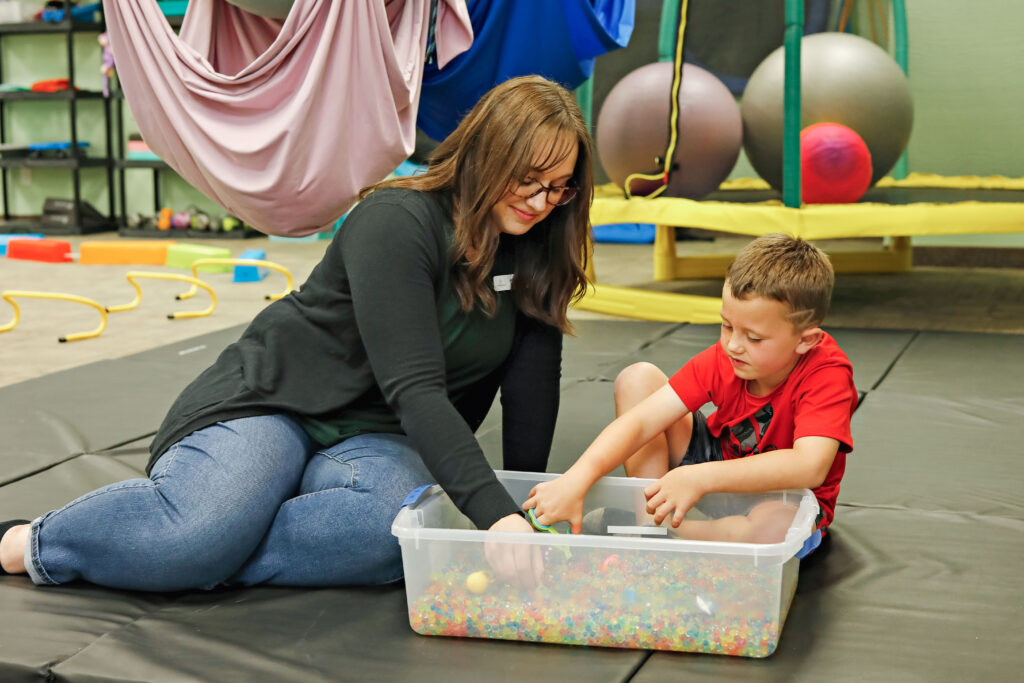
The following could be included in a self-regulation therapy children Billings session:
Activities Based on Play
Children can develop their flexibility, turn-taking, frustration tolerance, and emotional awareness through games and imaginative play.
Sensory Techniques
Some kids may be able to identify and address their regulating requirements with the use of movement, tactile activities, or soothing sensory experiences.
Identification of Emotions
Children can learn how various emotions feel and appear through role-playing, novels, stories, and photographs.## Practice in Real-World Circumstances
Therapists can assist kids in practicing coping mechanisms for things like losing a game, giving up a beloved hobby, or asking for assistance.
Parent Guidance
Parents can identify opportunities to practice skills outside of therapy and learn how to reinforce tactics at home.
For families seeking support outside of the therapy setting, self-regulation therapy children Billings services can be beneficial because of this pragmatic approach.
When Should Parents Get Expert Assistance?
If your child’s emotional or behavioral issues regularly interfere with:
- Participation in school
- Family customs
- Rest
- Friendships
- Self-care
- Interaction
- Have fun
- Community-based initiatives
When your child appears incapable of calming down without substantial adult assistance or when emotional outbursts are getting harder to control, professional support may be very beneficial.
It is not a sign that your child has a problem when you begin self-regulation therapy children Billings services. It implies that you are providing them with more resources to help them acquire critical abilities.
Building a Team Around Your Child
When the adults in their immediate environment employ consistent techniques, children frequently advance the fastest.
A child’s team may consist of the following, depending on their needs:
- Caregivers and parents
- Occupational therapists for children
- Instructors
- Counselors
- Psychologists
- Children’s doctors
- Speech-language pathologists
Coordinated efforts can link emotional regulation OT Montana practices with home routines, counseling, classroom modifications, and other forms of assistance.
Collaboration amongst providers can help families looking for pediatric mental health Billings MT services make sure that every aspect of a child’s care supports the larger picture.
Concluding Remarks
Being a child involves experiencing strong emotions. Making kids stop feeling upset, anxious, disappointed, or annoyed is not the aim. Helping kids comprehend such feelings and learn constructive coping mechanisms is the aim.
Early support can offer useful strategies for everyday issues, regardless of whether your child requires behavior support pediatric OT, coping skills therapy for kids, or child tantrum behavioral therapy.
Children can develop emotional awareness, adaptability, communication, and coping skills with the use of self-regulation therapy children Billings programs. Families can build a supportive route toward more self-assurance and independence with emotional regulation OT Montana, kids emotional dysregulation support, and, when necessary, childhood anxiety counseling Billings.
Seeking professional advice can be a beneficial first step when emotional difficulties start to interfere with daily life. Contact us Call/Text: 406-647-0042




No comment yet, add your voice below!