

It may appear like easy children activities to run across a playground, climb stairs, leap over puddles, and balance on one foot. However, the combination of muscle power, balance, coordination, and body awareness needed for these motions develops progressively during development.
Parents may question whether their child’s growth is proceeding as planned if the child has difficulty with these routine movements. Children who receive extra assistance with gross motor delay therapy Billings MT services may be able to improve their fundamental motor skills and engage in daily activities with greater assurance.
Children’s play, education, self-care, and independence can all be supported by pediatric occupational therapy. Therapists concentrate on balance, coordination, body awareness, and other skills that make mobility easier and more pleasurable through engaging activities customized to each child’s ability.
Understanding gross motor development will help you determine whether professional guidance may be helpful if you’ve seen that your kid frequently trips, avoids playground activities, or finds it difficult to keep up with classmates during physical play.
Gross Motor Skills: What Are They?
The big muscles of the body, such as those in the arms, legs, chest, and core, are involved in gross motor abilities. These muscles help kids move around, maintain proper posture, and engage in physical activities.
Gross motor skills include, for example:
- Sitting up straight and keeping your balance
- Walking, standing, and crawling
- Jumping, hopping, and running
- Climbing playground equipment and stairs
- Kicking, catching, and tossing balls
- Maintaining one-footed balance
- The ability to coordinate movements on both sides of the body
Children don’t all hit milestones at precisely the same age, and these skills improve with time. On the other hand, recurrent mobility issues would suggest that further assistance would be beneficial.
Children can practice fundamental motions in a safe setting while gaining the strength and coordination required for daily tasks with gross motor delay therapy Billings MT.
Indications That Your Child May Have Gross Motor Delays
Each youngster has unique challenges and capabilities. While some kids prefer quieter hobbies, others are instinctively drawn to energetic play. When participation or independence are regularly hampered by mobility issues, the difference becomes more apparent.
Parents may observe indicators like:
- Frequently slipping or stumbling in comparison to developmental expectations
- Inability to run, jump, or climb
- Steer clear of physical games and playground equipment
- Having trouble climbing or descending stairs
- Inadequate balance when walking or standing
- Coordination issues between the two sides of the body
- Fatigue while engaging in tasks that peers can handle with ease
- Having trouble sitting with an upright posture
pediatric gross motor OT Montana services can assist in determining which underlying skills require attention if these difficulties continue.
An occupational therapist can evaluate how a child’s everyday activities, play, and involvement at home or school are impacted by mobility. The child may benefit from physical therapy, occupational therapy, or a combination of therapies, depending on the results.
The Benefits of Occupational Therapy for Gross Motor Development
Children who receive occupational therapy are able to acquire the skills necessary to engage in fulfilling everyday activities. Pediatric occupational therapy can address gross motor skills when they impact functional participation, even though occupational therapists are frequently linked to handwriting and fine motor development.
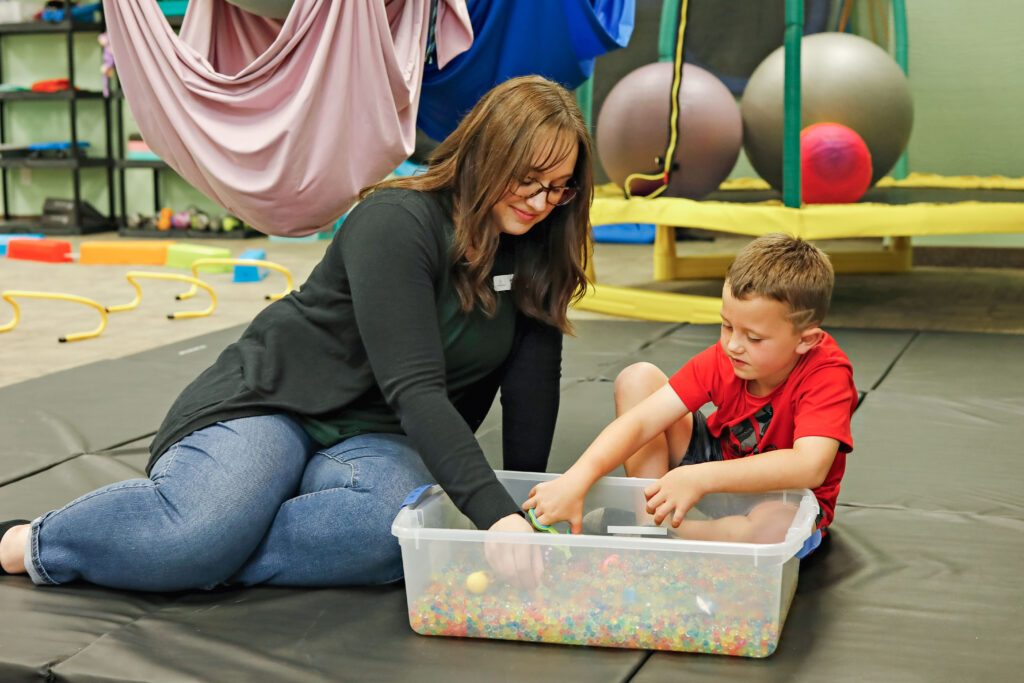
Movement games, climbing exercises, obstacle courses, and exercises aimed at enhancing body control and coordination are all possible components of sessions with gross motor delay therapy Billings MT.
When choosing activities, therapists take the child’s existing skills, interests, and developmental needs into account. Making practice interesting while focusing on particular abilities is the aim.
Greater confidence during playground activities, classroom routines, sports, and family outings can be supported by this tailored approach to the motor skills development children require.
Creating Coordination and Balance
Children with good balance can stand, sit, or move in a steady position. They can arrange various body movements to accomplish a task efficiently with the aid of coordination.
Activities like jumping, catching a ball, or traversing playground equipment may be especially difficult for kids who suffer in these areas.
Therapy for children’s balance and coordination may consist of:
- Following a designated path
- Overcoming low obstacles
- Using balls of varying sizes to play catch
- Working on securely stepping up and down
- Finishing basic movement sequences
- Managing obstacle courses that are age-appropriate
These exercises help kids become more adept at coordinating their bodies, responding to positional changes, and modifying their movements.
Therapists can modify exercises using pediatric gross motor OT Montana to fit a child’s ability level, progressively raising the difficulty as abilities advance.
Children can engage in movement-based play and daily routines more comfortably if they have regular opportunities to practice child balance and coordination therapy exercises.
Why Children’s Core Strength Is Important
The basis for posture, balance, and coordinated movement is provided by the core muscles, which aid in stabilizing the trunk and pelvis.
When playing physical games, sitting at a desk, climbing playground equipment, and staying upright, children employ their core strength.
A youngster who has trouble with core stability may fatigue easily, slump while sitting, lean heavily on furniture, or find it difficult to maintain control when moving.
Instead than relying just on repetitious workouts, core strength treatment kids can engage in enjoyable activities.
Examples consist of:
- Squeezing through tunnels
- Reaching for toys while playing on the ground
- Climbing over soft barriers
- Taking practice walks with animals
- Finishing basic balance games
- Reaching all around the body to gather items
These exercises improve endurance and coordination while also promoting trunk stability.
In order to make the activities applicable to the child’s everyday life, a therapist may integrate core strength treatment kids into more general movement goals.
Core strength therapy kids can assist the postural control required for play, engagement in class, and other daily chores when given the right instruction.
Comprehending Proprioception and Body Awareness
For children to move securely and precisely, they must comprehend where their bodies are in space. Proprioception, the sensory system that provides information on the position and movement of muscles and joints, plays a role in this skill, which is referred to as body awareness.
Children who struggle with body awareness may bump into items, appear abnormally clumsy, use excessive or insufficient power, or have trouble judging how far to move.
Children can practice observing their body position and modifying their movements during functional activities with the use of children’s body awareness therapy.
Activities like crawling, pushing small objects, carrying age-appropriate things, or traversing obstacle courses may be introduced by a therapist.
Children can practice movement control and learn how much force is needed for a task by participating in safe exercises that give feedback to their muscles and joints.
For instance, during a supervised game, a kid might practice pushing a therapeutic ball toward a target or moving objects of various sizes.
Both proprioception treatment for kids and children’s body awareness therapy can be tailored to the child’s needs and integrated into purposeful play.
Movement Therapy’s Function in Billings
Children can solve difficulties, develop confidence, and discover their potential via movement. Structured movement exercises can help kids with gross motor difficulties feel less nervous about learning new abilities.
Movement therapy children Billings families explore may include play-based activities that address balance, coordination, strength, motor planning, and body awareness.
A session could include:
- Adhering to a basic obstacle course
- Climbing over age-appropriate, secure structures
- Jumping and landing exercises
- Engaging in games that require stopping and starting
- Reaching for things while keeping your balance
- Changing positions while playing on the floor
By tying movement practice to functional objectives, these exercises can enhance physical development OT pediatric programs.
The therapist monitors the child’s reaction and modifies the level of difficulty as necessary. Activities should be carried out under adequate supervision and be acceptable for the child’s developmental stage.
Gross Motor Milestones: What Are They?
The developmental skills that children usually gain as they grow are known as gross motor milestones. Although the timing varies from child to child, they offer helpful benchmarks for comprehending growth.
Assessments of gross motor milestones in occupational therapy may take into account the development of abilities including sitting, crawling, walking, running, jumping, and balancing.
Parents can keep an eye on their child’s development by seeing if the youngster can engage in age-appropriate activities and whether their movement abilities are getting more controlled.
A professional evaluation can help determine whether further assistance is required if a kid continuously struggles with predicted mobility abilities.
Instead of concentrating solely on a child’s ability to do a specific activity, assessments of gross motor milestones occupational therapy also take into account how movement impacts daily functioning.
Families can address concerns with their physician and decide on the best course of action by being aware of the gross motor milestones occupational therapy specialists evaluate.
How Therapy Is Enjoyable with Pediatric OT
Engaging activities that are related to their interests are frequently the best ways for kids to learn. Therapists may include movement goals into games, pretend play, and age-appropriate challenges rather than repeatedly asking a kid to perform the same movement.
An obstacle course, for instance, could assist a youngster practice stepping over things, keeping their balance, and synchronizing their motions. Crawling, reaching, sitting, and shifting positions could all be encouraged by a pretend animal experience.
Movement therapy children Billings providers frequently include these entertaining activities.
When scheduling sessions, therapists also take weariness, motivation, concentration, and sensory preferences into account. This enables kids to engage at a comfortable level while progressively learning new skills.
Children can work toward functional goals that are directly related to their daily routines and interests with physical development OT pediatric programs.
Does Your Child Require Physical Therapy or Occupational Therapy?
For gross motor issues, parents may not always know if physical therapy or occupational therapy is preferable. Although their methods and areas of focus may vary, both professions can assist children’s mobility.
The impact of movement on everyday activities, such as play, self-care, school involvement, and functional independence, is frequently the focus of occupational therapy.
Movement mechanics, strength, mobility, balance, and physical function are typically given more attention in physical therapy.
An evaluation of strength and balance, for instance, can be helpful for a youngster who finds it difficult to climb onto a playground structure. Occupational therapy may be useful as part of the care plan if the same kid also struggles with dressing, using classroom equipment, or engaging in play due to coordination issues.
Both services are beneficial to certain kids. Which evaluation is appropriate can be determined with the assistance of a pediatrician or licensed therapist.
When considering pediatric gross motor OT Montana services, families should inquire about how the professionals handle the child’s unique needs and whether a referral to physical therapy could also be helpful.
When Should Parents Request an Assessment?
If your child’s mobility issues continue, interfere with daily activities, or appear more severe than typical for their developmental stage, you might want to talk to their pediatrician.
If your child avoids physical play because it feels too hard, has trouble with numerous movement skills, or has lost ability, you might also want to get help.
Posture, strength, balance, coordination, motor planning, and functional involvement can all be observed during an assessment.
According to the results, gross motor delay therapy Billings MT could be a solution for problems found. Additionally, the therapist can clarify whether other specialists should be involved and suggest techniques for at-home practice.
It’s not necessary to assume the worst while making an early assessment. It gives you the chance to learn about your child’s strengths, pinpoint areas of concern, and create a suitable assistance plan.
Encouraging Home-Based Motor Development
Through regular play, parents can promote their children’s motor skills. Activities ought to be fun, safe, and appropriate for the child’s age and skill level.
Think about attempting:
- Using a soft ball to play catch
- Following a line that has been drawn on the ground
- Dancing while listening to music
- Stepping over low obstacles is a practice.
- Constructing a basic indoor obstacle course
- Playing under supervision using playground equipment
- Promoting vigorous outdoor play
Children can practice movement in a variety of scenarios with these experiences.
An occupational therapist may recommend activities for children undergoing proprioception treatment for kids that support their personal objectives. Similarly, common activities and domestic routines can combine children’s body awareness therapy techniques.
When a child’s skills grow, families can ask their therapist how to modify activities. When a customized treatment plan is required, home practice should support it rather than take its place.
Using Movement to Help Your Child Develop Confidence
More than only physical skills might be impacted by gross motor difficulties. Youngsters who find it difficult to keep up with their peers may lose confidence in their ability to participate, shun group games, or feel frustrated.
Children can practice without undue pressure in a supportive treatment setting.
Children can develop skills that facilitate play and daily activities through child balance and coordination therapy, core strength therapy kids activities, and personalized movement goals.
Additionally, a therapist can assist parents in figuring out how to promote involvement without comparing their child to friends or siblings.
Since every child develops differently, progress may occur gradually. Celebrating little victories helps keep kids engaged and help them realize their achievements.
Concluding Remarks
Children with gross motor skills are better able to play, explore their environment, and handle daily tasks more independently. Finding the appropriate support can be made easier for families when balance, strength, coordination, or body awareness become problematic.
Individualized pediatric services, such as pediatric gross motor OT Montana and gross motor delay therapy Billings MT , can assist kids in developing critical movement skills through purposeful, interesting activities.
Understanding your child’s unique needs is the first step in determining if they require motor skills development children programs, child balance and coordination therapy, core strength therapy kids activities, or physical development OT pediatric support.
Consult a pediatrician or licensed pediatric therapist if you are worried about your child’s motor development. Children can strive toward increased confidence and involvement in the things that make childhood fulfilling with the right evaluation, focused practice, and support.



No comment yet, add your voice below!