Every youngster sees, hears, feels, and moves through the world in their own way. But for other kids, the things they feel every day might be too much or hard to understand. If your child covers their ears when they hear certain sounds, won’t wear particular types of clothes, or won’t play with filthy things, they may have sensory issues.
More and more parents in Billings are using therapy for sensory regulation to help their kids deal with these problems and do well. Kids with sensory processing disorder or who just need additional help getting around the sensory world around them might benefit greatly from this kind of treatment.
How to Help Kids with Sensory Issues
Sensory issues happen when a child’s brain has trouble understanding or responding to sensory information. Some kids are very sensitive (hypersensitive) to things like sound, touch, or movement, while others may not respond to them at all (hyposensitive).
For instance, a kid might:
- Get angry when there are loud noises or bright lighting
- Don’t wear specific kinds of clothes
- Always want to move or slam into stuff
- Don’t let them play with sand, food with specific textures, or other dirty things.
These actions aren’t just “quirks.” These are symptoms that your child’s sensory system may require help getting used to the world around them. Therapy for sensory regulation can help put things back into balance.
What is SPD, or Sensory Processing Disorder?
People with sensory processing disorder (SPD) have trouble organizing and reacting to sensory input. Kids with SPD could have trouble with coordination, paying attention, or controlling their emotions.
Not all kids with sensory issues have SPD, but those who do typically have problems that make it hard for them to go about their everyday lives at home, at school, and in social situations. The good news is? With early help and specialized therapy for sensory regulation, kids can learn to better deal with sensations and gain skills that help them feel more confident and independent.
Signs that sensory therapy could help your child
It’s not always easy to tell when to seek professional help. Here are some signs your child might benefit from therapy for sensory regulation in Billings:
- Meltdowns caused by noises, textures, or touch
- Not being able to sit still or focus
- Too much movement-seeking (jumping, spinning, or crashing)
- Having trouble with small motor skills like buttoning garments or writing
- Not wanting to try new places or things
- Strong responses to changes in routine
If these behaviors keep getting in the way of your child’s everyday life, you should probably go to an occupational therapist who works with people with sensory processing disorder.
How Therapy for Sensory Regulation Works
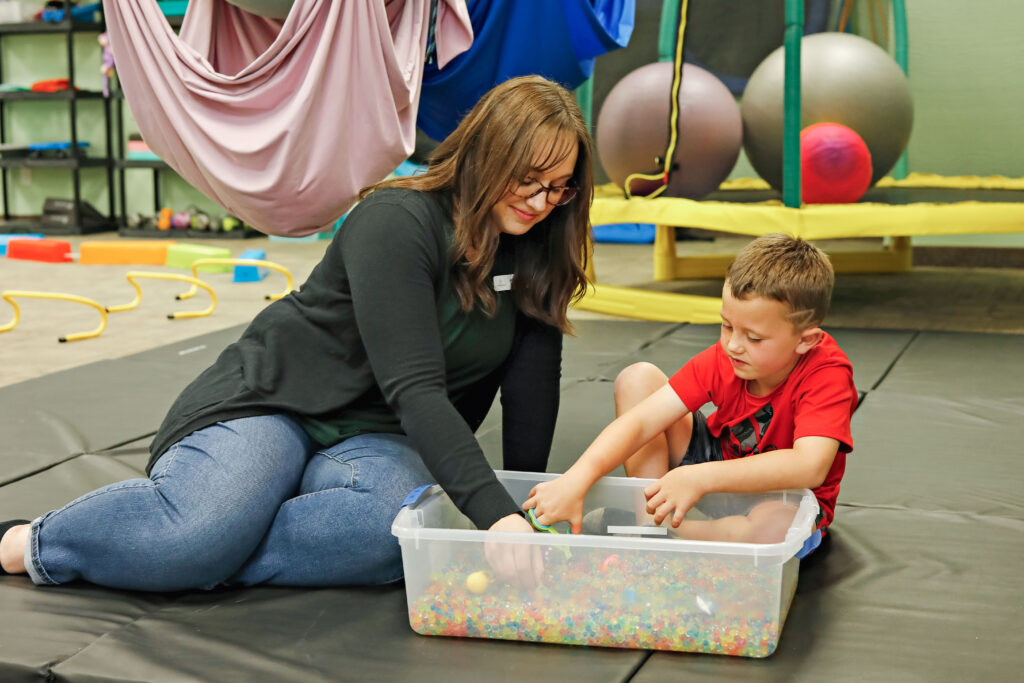
Therapy for sensory regulation focuses on teaching kids how to deal with sensory input in a safe, regulated, and fun way. In Billings, pediatric occupational therapists utilize methods that are based on research and are specific to each child’s sensory profile.
Therapy may involve:
- Activities like swinging or leaping to help with body awareness and balance
- Playing with things that have a texture, such sand or shaving cream, can help lower touch sensitivity.
- Obstacle courses are activities that require mobility to improve attention and coordination
- Deep pressure or soothing exercises to help you control yourself
The youngster thinks these sessions are fun, but each one has a purpose: to help the brain better organize sensory information.
What Parents Can Do to Help with Sensory Therapy
Parents play a crucial role in supporting their child’s progress. Occupational therapists often provide at-home strategies that help reinforce therapy for sensory regulation, such as:
- Making tranquil places using sensory-friendly things like weighted blankets, fidget toys, or headphones that block out sounds
- Encouraging breaks for activity while doing homework
- Using routines that are easy to follow to lower stress
Therapists and parents may work together to make things more consistent, which helps kids with sensory processing disorder become more confident and independent.
How to Find Sensory Therapy in Billings
If you’re searching for therapy for sensory regulation in Billings, you’ll discover specialists that are devoted to helping people with sensory issues. Search for:
- Occupational therapists for kids that are licensed
- Clinics that provide sensory integration therapy
- Individualized treatment options that fit your child’s needs
- A kind, loving place that puts kids first
Early intervention can have a lasting effect by helping your kid feel more comfortable in everyday life and attain their full potential.
Last Thoughts
Children with sensory issues may feel like the world is too much for them, but they may get better with the correct help. Kids can learn to deal with their feelings better, feel more confident, and take part more completely in play, learning, and family life via sensory regulation.
Don’t delay to get assistance if you think your child could have sensory processing disorder. There are kind therapists in Billings that can help your child have a calmer, more balanced, and happy life. Call/Text: 406-647-0042