Does Your Child Struggle with Fine Motor Skills? Here’s How OT Can Help

Is your child experiencing trouble with simple things like tying their shoes, buttoning their shirt, or carrying a pencil the right way? These problems might not just be normal clumsiness; they could be symptoms that your child is having trouble with their fine motor skills. Occupational therapy (OT) may help a lot, which is a good thing.

We’ll talk about how OT helps kids who have trouble with hand-eye coordination, handwriting skills, and pencil grip in this blog article. We’ll also talk about how to tell if your child needs help.


What are fine motor skills, and why are they important?

Fine motor abilities employ the little muscles in the hands, fingers, and wrists to do things that need to be done exactly, like:

  • Writing and painting
  • Cutting with scissors
  • Zipping up coats or buttoning shirts
  • Eating with cutlery
  • Playing with blocks or puzzles

When these talents aren’t fully developed, it can make it hard for a youngster to do everyday things, do well in school, and feel good about themselves in social situations.


Signs Your Child Might Have Trouble with Fine Motor Skills

Kids grow up at their own rate, but if they keep having problems in the following areas, they may require help:

  • Bad hand-eye coordination whether playing catch, coloring, or using utensils 
  • Illegible or slow handwriting skills
  • Wrong or strange ** A pencil grip that makes your hands tired 
  • Not wanting to do things like drawing, writing, or cutting 
  • Getting angry when doing fine motor chores at school or home

If any of this sounds like you, you might want to think about getting an examination from an occupational therapist.


How Occupational Therapy Can Help

Occupational therapy (OT) helps kids become more independent in their everyday lives by helping them develop their physical, mental, and emotional abilities. OT gives youngsters who are having trouble with fine motor skills specific ways to improve their strength, coordination, and accuracy.

Here is how OT helps in some areas:

Making hand-eye coordination better

OTs employ games and activities to improve hand-eye coordination, like:

  • Putting beads on thread 
  • Playing catch or ball games 
  • Picking up little things with tweezers 
  • Tracing lines and figures

These games make the link between what the eyes perceive and how the hands respond stronger, which is important for doing well in school and having fun.

Improving your handwriting skills

A lot of kids who have trouble with fine motor abilities often have trouble with their handwriting skills. Therapists utilize planned activities to help kids:

  • Make your fingers and hands stronger and more stable 
  • Learn how to write letters correctly 
  • Make your writing easier to read and space out 
  • Write for longer periods of time

Kids who don’t like to write typically love these sessions since they are meant to be enjoyable and interesting.

Fixing how you hold the pencil

Holding a pencil the wrong way might make you tired, lose control, and get angry. OTs help kids get a better pencil grip by:

  • Showing how to hold the pencil correctly 
  • Using items that make writing easier, including pencil grips or slant boards 
  • Writing with different types of pens and papers

Fixing pencil grip early on may make a big difference in how well you write and how sure you are of yourself.


What to Expect During an OT Session

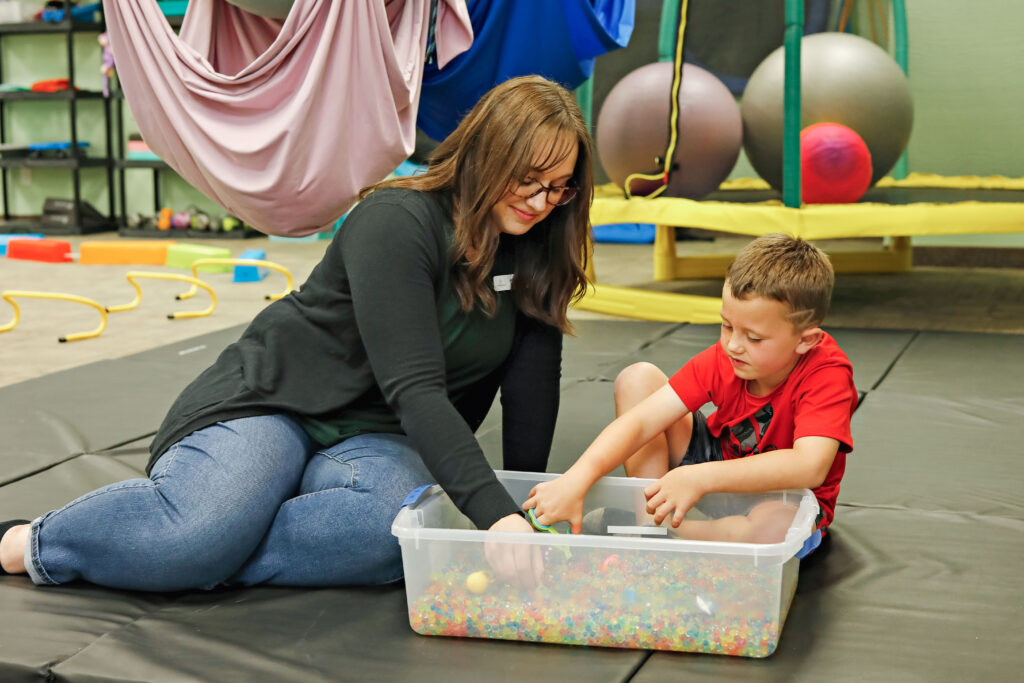
Your kid will do hands-on, play-based activities that are tailored to their age and interests during an OT session. A usual session might include:

  • Games that increase strength 
  • Tasks that combine visual and motor skills 
  • Activities that are favorable to the senses 
  • Practice with writing or cutting

Therapists work with parents and caregivers to make sure that things are the same at home and at school.


The Benefits of Early Intervention

Early help may make a huge difference in how well a child develops their fine motor skills. When kids get better at hand-eye coordination, handwriting skills, and pencil grip, they not only do better in school, but they also feel more confident, independent, and happy about learning.


Last Thoughts

Don’t delay if your youngster is having trouble with fine motor skills. Occupational therapy has been shown to help kids do well. If your child has trouble with their hand-eye coordination, handwriting skills, or pencil grip, OT can help them make progress instead of getting frustrated.

Parents in Billings and other places are learning how early therapy may change their lives. If you want to help your child’s growth, contact us at 406-647-0042 right away. You may not realize it, but help is closer and more effective than you believe.

How Pediatric Occupational Therapy Helps Kids Thrive in Billings

Pediatric occupational therapy is very important for helping children develop, learn, and live to their best possibilities. From fine motor skills to sensory integration and all in between, parents are turning to child therapy services more and more in Billings to help their children’s development.

Whether your child struggles with everyday activities, emotional control, or academic achievement, OT for kids can offer the specific help required for success. Let’s look at how pediatric occupational therapy is improving Billings and discuss how best to locate the appropriate help for your child.

Describes pediatric occupational therapy.

Pediatric occupational therapy, or OT, is a kind of treatment designed to assist children become independent and enhance their abilities required for daily tasks. This can incorporate:

  • Dressing
  • Writing
  • Eating
  • Playing
  • Socializing
  • Sensory processing

Often starting in infancy, OTs deal with children of all ages. Whether the child’s particular difficulties are attributable to developmental delays, injuries, autism spectrum disorder, ADHD, or another ailment, they modify their approach.

Why Billing Parents Choose OT for Kids

Billings families know that child therapy is not limited to children with obvious difficulties. Many youngsters struggle with issues that are not immediately clear but yet influence their daily life.

Here’s how OT for kids is changing things locally:

1. In support of early development

When a parent finds their kid falling short of expectations, many initially look for “pediatric therapy near me“. By evaluating a child’s sensory demands, cognitive development, and motor abilities, occupational therapists can spot areas needing work.

Early intervention is crucial; a kid can advance more quickly the sooner occupational therapy starts.

2. Giving School-Aged Children Confidence

Occupational therapy assists school-age children with classroom duties including organization, penmanship, and attention span. Therapists also help with emotional control so children may manage changes or frustration more readily. This encourages youngsters to participate more in their classroom and to feel more confident.

Several clinics in Billings provide child therapy services both school-based and outpatient to satisfy these requirements.

3. Promoting Independence Right at Home

Some children find simple tasks like brushing their teeth, tying their shoes, or using utensils to be huge difficulties. By helping to divide these chores into reasonable chunks, OT makes family life easier and more fun for the kid as well as for the parents.

What to Anticipate from a Pediatric Occupational Therapy Session

If you are fresh to occupational therapy, you may be curious about the nature of a session. You should anticipate this:

  • Assessment: The therapist will assess your child’s developmental, emotional, and physical requirements.
  • Personalized Plan: Targeting certain goals based on the evaluation, a treatment plan is prepared.
  • Play-Based Activities: OT for kids sometimes consists in enjoyable, interesting exercises meant to naturally develop abilities.
  • Parental Guidance: Therapists work closely with parents to maintain improvement at home.

As treatment advances, you will likely see changes in coordination, attention span, and even sleep patterns.

How to Find Pediatric Therapy Near Me in Billings

You are fortunate if you are looking for “pediatric therapy near me” in Billings. Many talented and sympathetic therapists in the city focus in OT for kids.

These guidelines will enable you to choose the appropriate provider:

  • Ask your physician, school, or other parents for references
  • Check credentials to be sure the therapist is licensed and qualified in kid treatment.
  • If your kid has particular requirements, visit the clinic to check whether the surroundings seem nice and child-friendly
  • Search for specialties such sensory integration or behavioral treatment.

Your child’s therapy success depends on them finding the appropriate match.

The Extended Effects of Child Therapy

Putting money into child therapy can pay off lifetime. Children undergoing occupational therapy often show:

  • Improved academic performance
  • Better social skills
  • Increased independence
  • Enhanced emotional regulation

Most critically, though, they feel equipped to confidently meet daily obstacles.

Final Thought

Pediatric occupational therapy is a road to independence, confidence, and happiness, not only a set of drills. By enabling children’s individual growth paths, OT for kids is serving many families in Billings.

Not delay if you are looking for pediatric therapy near me. Early assistance can cause amazing improvements in the lives of your child. Pediatric occupational therapy may help your child not just grow but also really flourish in whichever area—handwriting, motor coordination, or sensory problem. Contact us!